
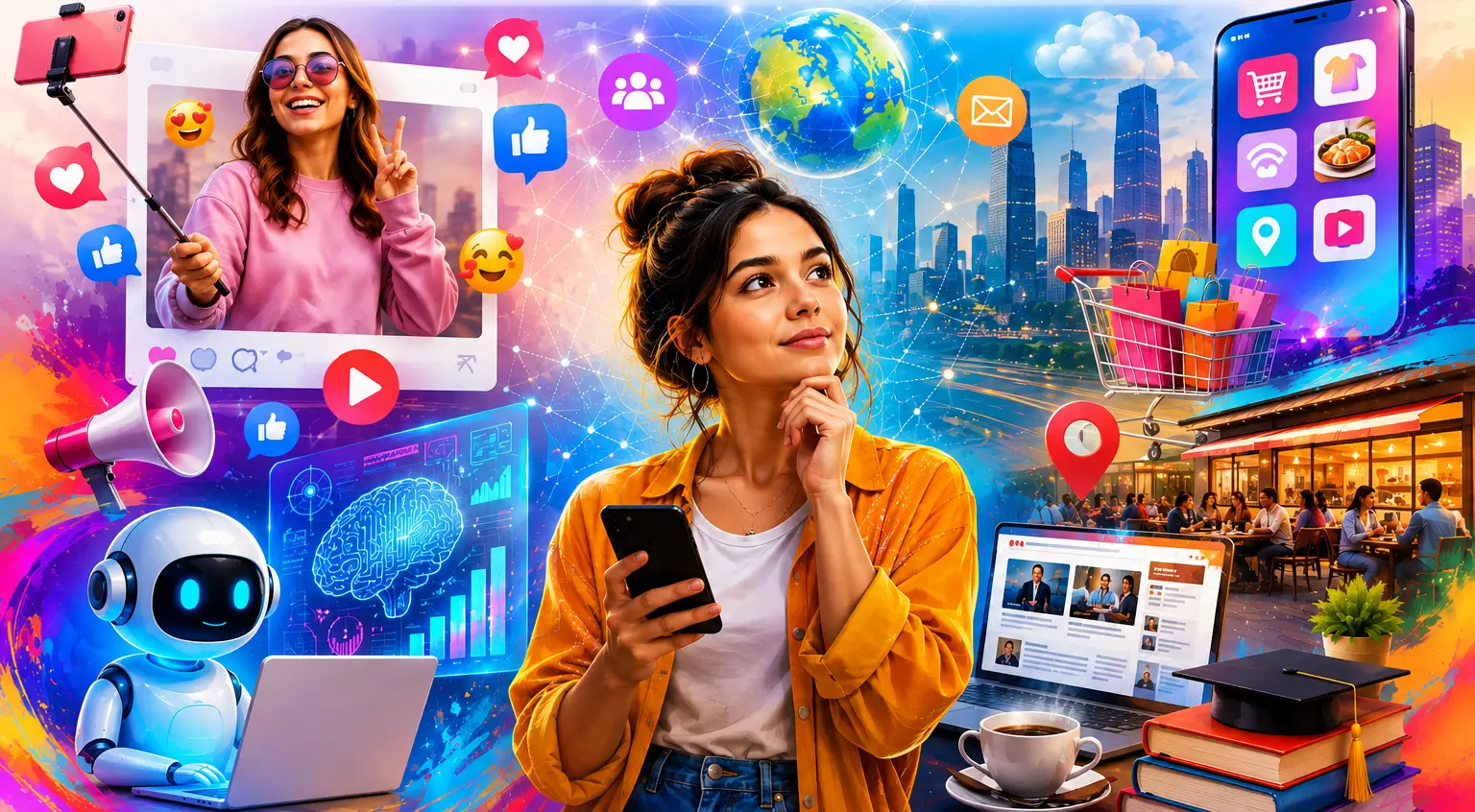
Digital technology has changed the way people make decisions in regular life. Nowadays an extensive number of people reply of online platforms for every thins from choosing a product, reading the news, selecting a restaurant or career guidance. Social media influencers, algorithm-based recommendation systems, and artificial intelligence (AI) tools increasingly impact these decisions. Public opinion is no longer entirely influenced by traditional sources of authority like instructors, specialists, and newspapers. As a result, AI-generated information, customized recommendations and digital interactions are being used to develop trust. Understanding why people trust influencers, algorithms, and AI is important because these factors are significantly impact on consumer behavior, public perception, and individual choices on a large scale.
Why People Trust Influencers
Social media influencers have become powerful because they seem to be genuine and approachable. Influencers share their daily routines, personal experiences, and honest views with their followers rather than traditional celebrities. This creates a feeling of familiarity and connection. Even though the relationship exists only through online content, followers often feel that they know the influencer personally,
Another reason influencers are trusted is social proof. When thousands or millions of people like, comment on, or share a post, viewers often assume that the content is reliable. A recommendation for a product, restaurant, or lifestyle habit may seem reliable just because many others appear to agree with it. Influencers can therefore have a big impact on lifestyle and buying or consuming decisions, especially among the younger audiences.
Why People Trust Algorithms
Systems that analyze user data and provide personalized recommendations are called Algorithms. Algorithms are used by search engines, streaming services, online stores, and social media platforms to depict consumer habits. Even though people unaware how these systems work, they frequently rely on the systems.
One reason is convenience. By filtering excess amounts of information, algorithms lessen the time required to make decisions. users are received with limited selection relevant to their interests rather than comparing hundreds of products or articles. Repeated favorable encounters increase the confidence in algorithm systems. For example, when a music platform suggests a song to user they like, its consistently suggest same taste of songs to user.
Because algorithms are based on data, people also show an impulse to believe that algorithms are objective. However, algorithms can reflect biases present in the data they are trained on, meaning their recommendations are not necessarily impartial or fair.
Why People Trust Artificial Intelligence
Digital trust has grown beyond simple recommendation systems due to Artificial intelligence. AI tools can answer questions, summarize information, create content, and provide personalized advice within seconds. They appear knowledgeable and reliable due to their natural language communicate abilities.
People tend to trust AI due to quick responds, accuracy, detailed, and confident responses. AI is increasingly used to support decision-making in education, healthcare, business, and customer service. However, AI systems can sometimes generate inaccurate or misleading information. The confidence of an AI-generated answer does not guarantee that it is accurate. Therefore, users should consider AI as a helpful assistant rather than a perfect source of truth.
Risk of Blind Trust
Serious problems are created over rely on AI, algorithms and influences too much. Influencers may promote products for financial gain rather than genuine belief. Algorithms may create filter bubbles, exposing users only to information that matches their existing opinions. AI systems may generate attractive but in false content. These concerns can impact on health decisions, financial investments, political opinions, and social interactions.
Developing digital literacy is essential. People should evaluate the evidence from multiple sources, and question information that seems overly emotional or sensational. Trust should be based on reliability and transparency rather than on popularity or convenience.
On a Final Note
Digital trust has become important in modern decision-making. Influencers mold opinions through authenticity and personal connection, algorithms guide choices through personalization and efficiency, and AI influences decisions through speed and intelligent interaction. These technologies have offered many advantages, but they also require users to think critically and thorough information verification. In the future, the most important skill will not be deciding whether to trust technology completely, but learning how to use digital tools wisely while maintaining independent human judgment.
Thilina Molligoda – Strategic Architect – Defense and Telco