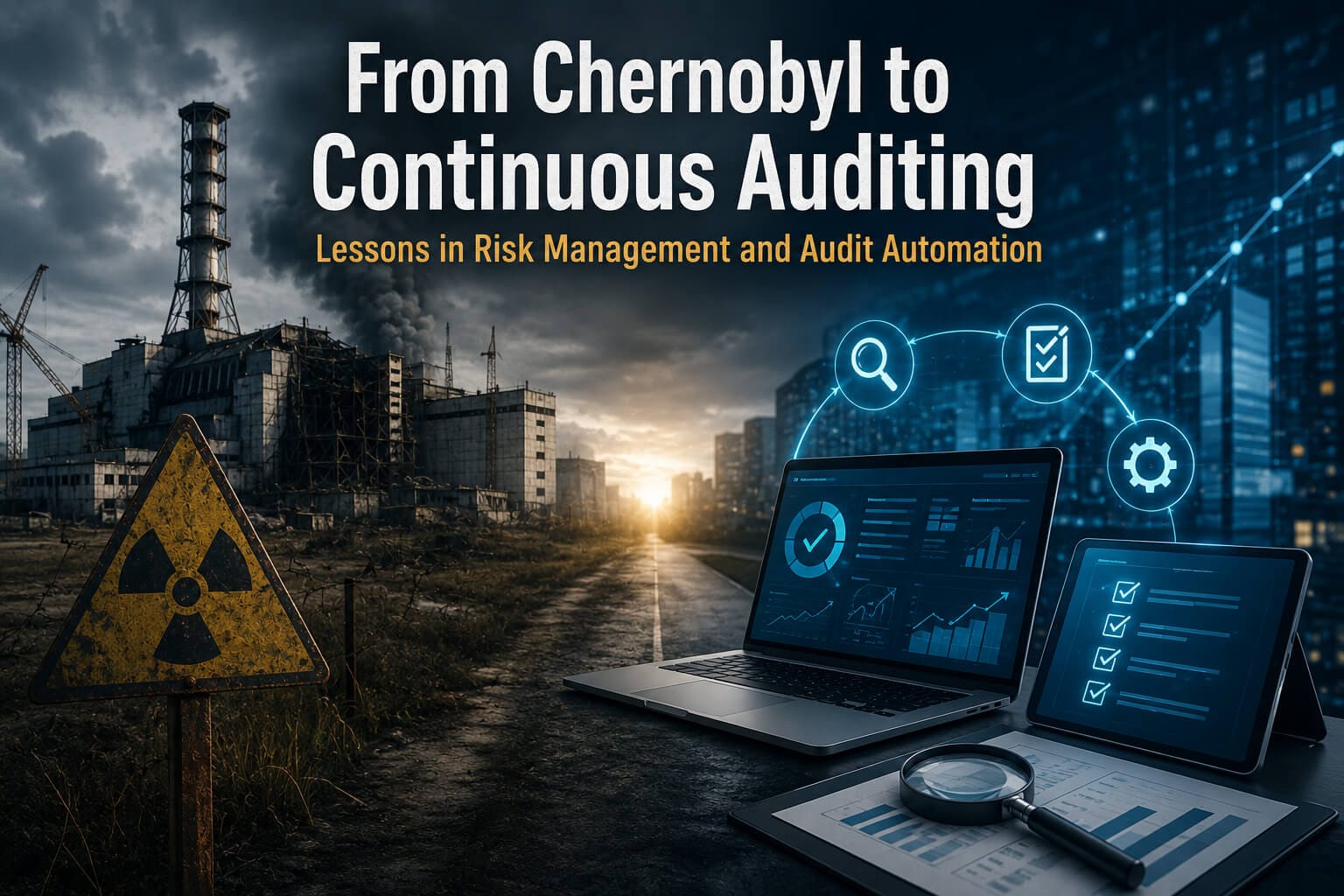
On 26 April 1986, Reactor No. 4 at Chornobyl exploded, releasing radioactive material across an entire continent. Decades later, the catastrophe still teaches organizations a vital lesson: when risks are unmonitored and oversight fails, the consequences can be devastating.
What Went Wrong at Chornobyl?
Investigations identified a cluster of systemic failures that will feel uncomfortably familiar to risk and audit professionals.
- Inadequate safety procedures and controls
- Failure to follow established operating protocols
- Poor communication and reporting of risks
- Insufficient independent oversight
- Weak safety culture within the organization
- Lack of timely identification and escalation of critical risks
The Critical Role of Auditing
Auditing is the independent mechanism that evaluates whether processes, controls, and compliance requirements are functioning effectively. A robust audit process enables organizations to:
- Identify operational risks before they become incidents
- Verify compliance with policies and regulations
- Evaluate the effectiveness of internal controls
- Improve accountability and transparency
- Support informed decision-making at every level
In high risk sectors – energy, healthcare, aviation, and finance, effective auditing is not a compliance checkbox; it is a frontline defence against catastrophic failure.
Challenges of Traditional Auditing
Traditional audit approaches, periodic, manual, sample-based, and largely reactive, were designed for a different era. As data volumes surge and risks evolve in real time, these approaches increasingly struggle to keep pace. The gap between when a risk emerges and when it is detected is growing — and that gap carries real organizational cost.
The Rise of Audit Automation
Modern organizations are turning to audit automation to close that detection gap. The benefits are substantial
- Continuous monitoring of transactions and controls, 24/7, not just at year-end
- Real time detection of anomalies and compliance violations
- Automated evidence collection and reporting, reducing manual workload
- Data driven risk assessments across full datasets, not just samples
- Greater audit coverage with fewer resources
Automation does not replace professional judgment — it elevates it. By freeing auditors from repetitive data-gathering tasks, it allows them to focus on what matters most: analyzing risk and driving strategic insight.
The Bottom Line
Chornobyl was not just a nuclear disaster; it was a governance failure. Audit automation moves organizations from periodic reviews to continuous oversight, turning reactive responses into proactive risk prevention.
The question is not whether your organization can afford continuous auditing. The question is whether it can afford not to.
Sajani Gunawardena -Lead Consultant Architect – BFSI